A sample tells you whether you like a surface. Before choosing it, ask what it will touch, how it will wear, and what the installer needs to know. Those answers matter long after the sample goes back in the box.
Start with the way you’ll use it
A floor at the entry, a kitchen counter, and a cabinet in a sitting room face different traffic, moisture, and cleaning. Ask for care instructions for the actual product. Decide whether you want the finish to stay even or are comfortable seeing it change with use.
Put the choices next to each other
Set the counter, cabinet, floor, and wall samples together in the room’s light. Decide which one should draw the eye. Then look at the edges. The transition is where you find out whether the materials make sense as a group.
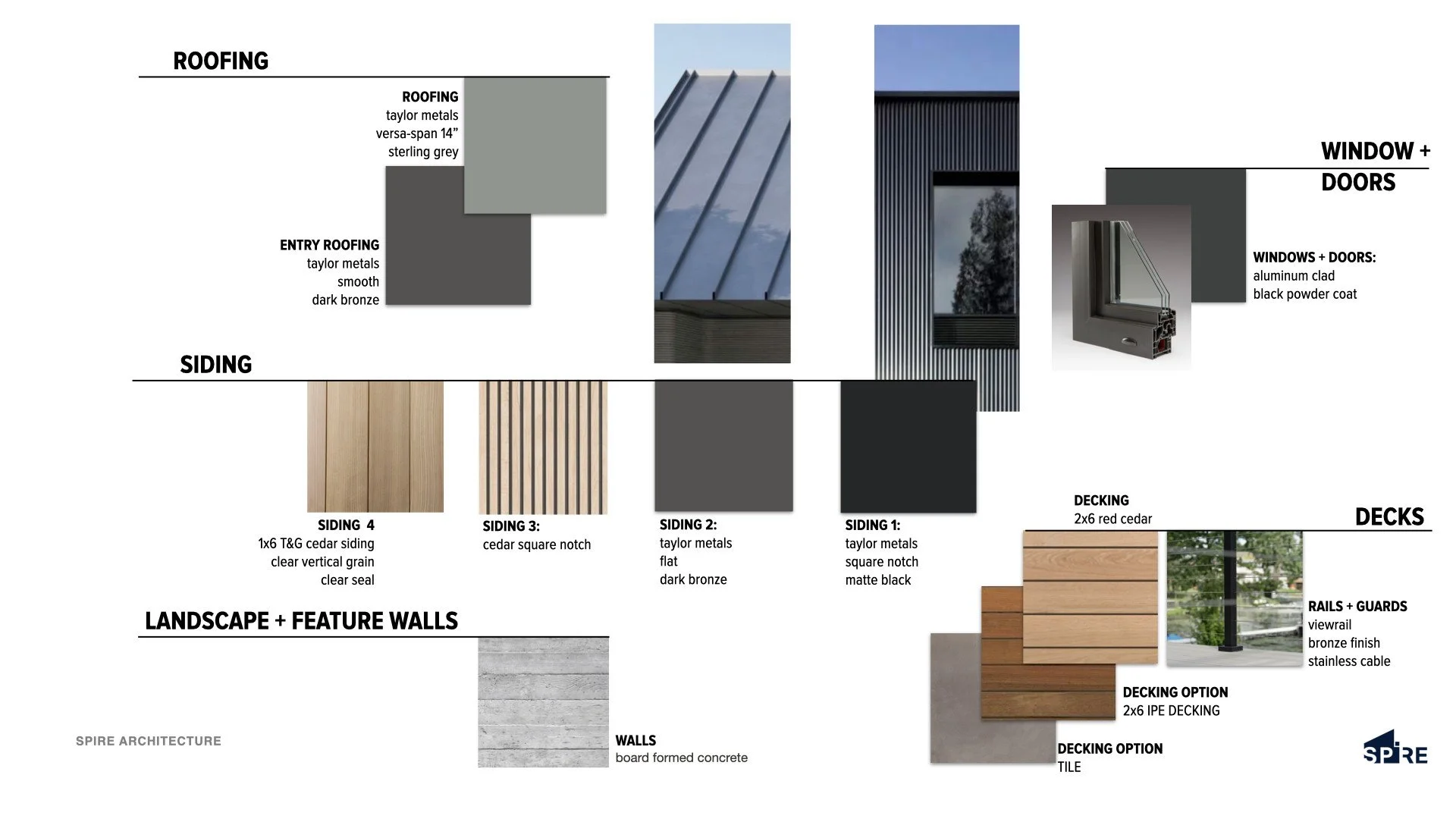
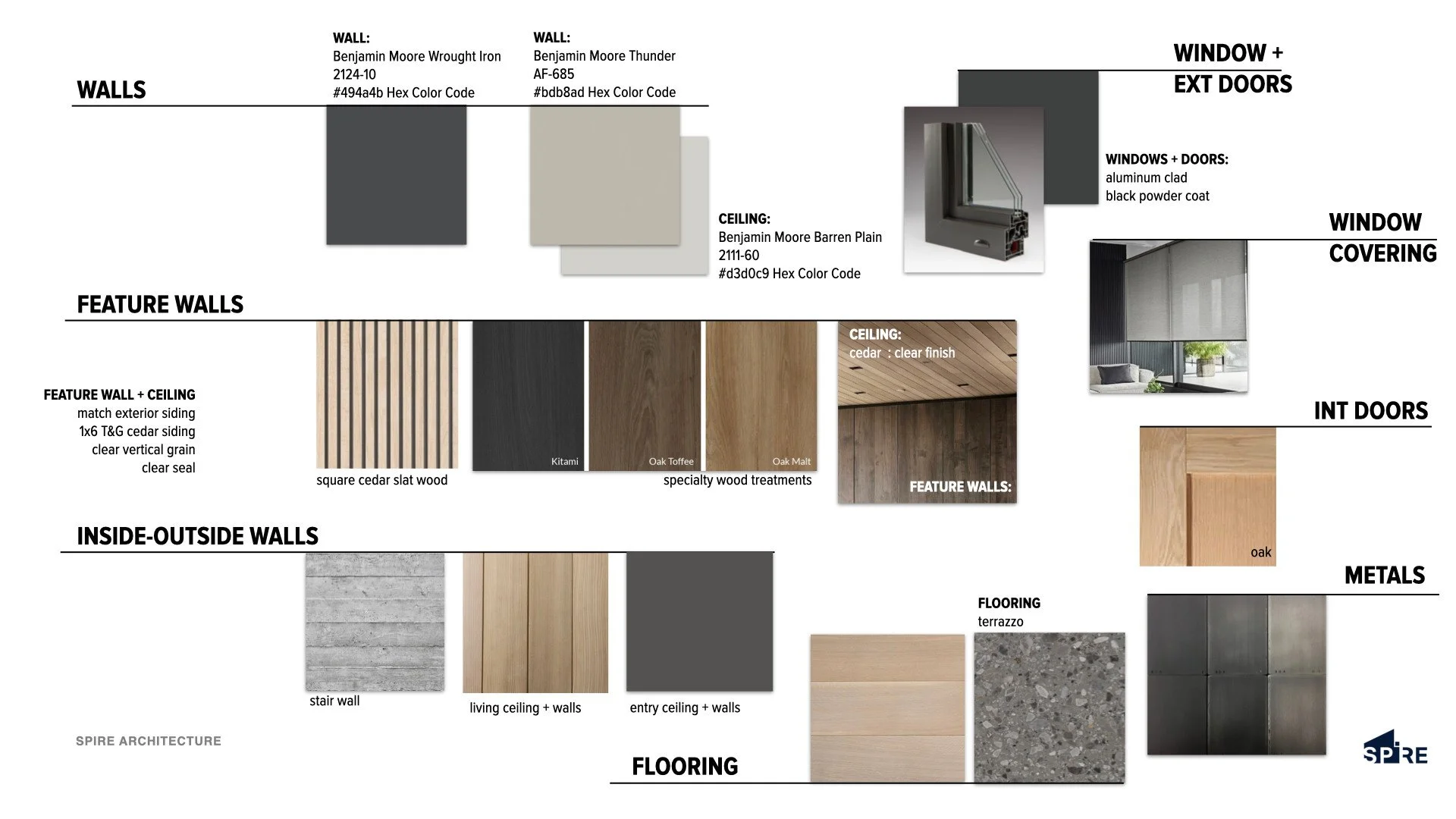
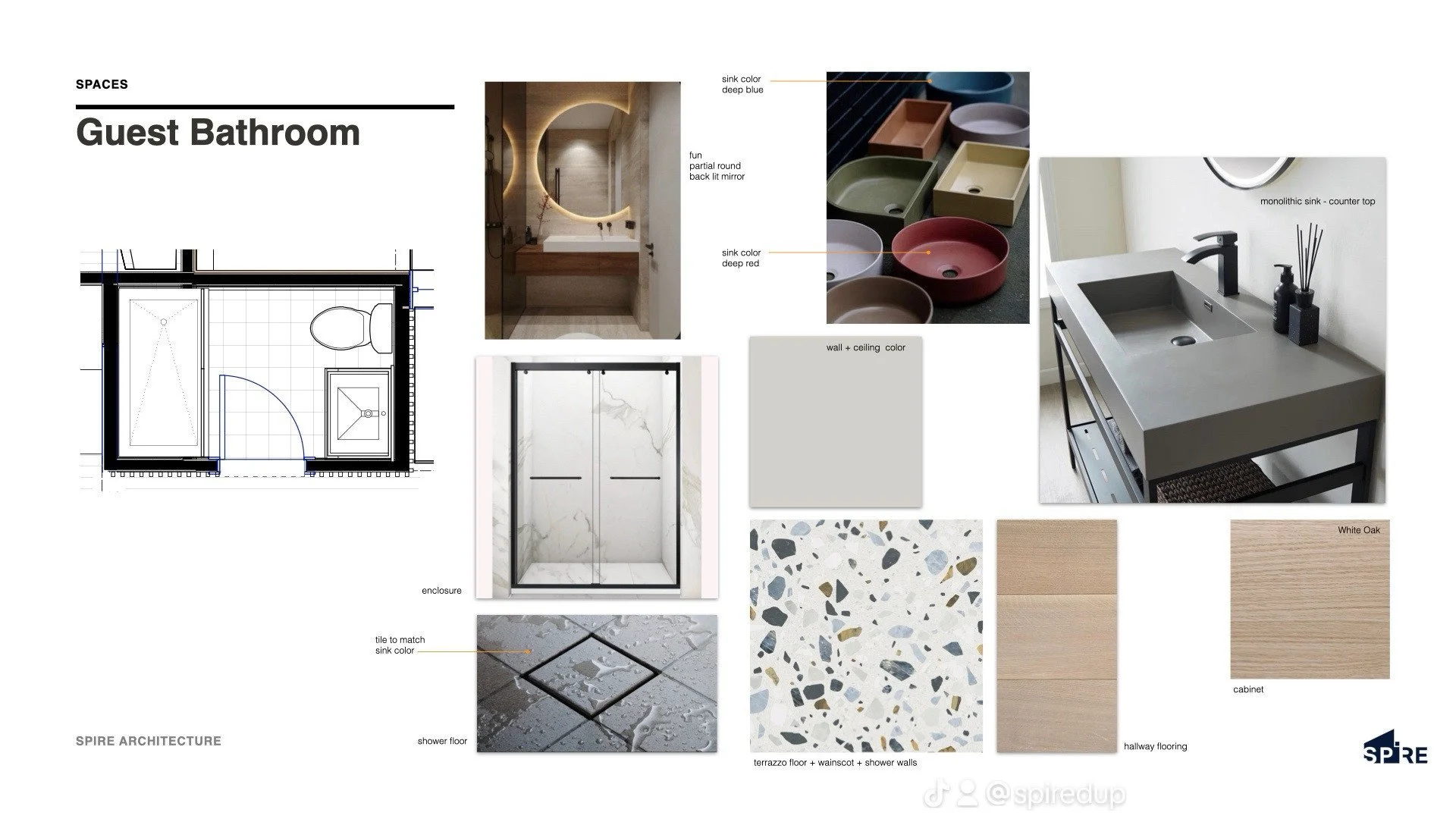
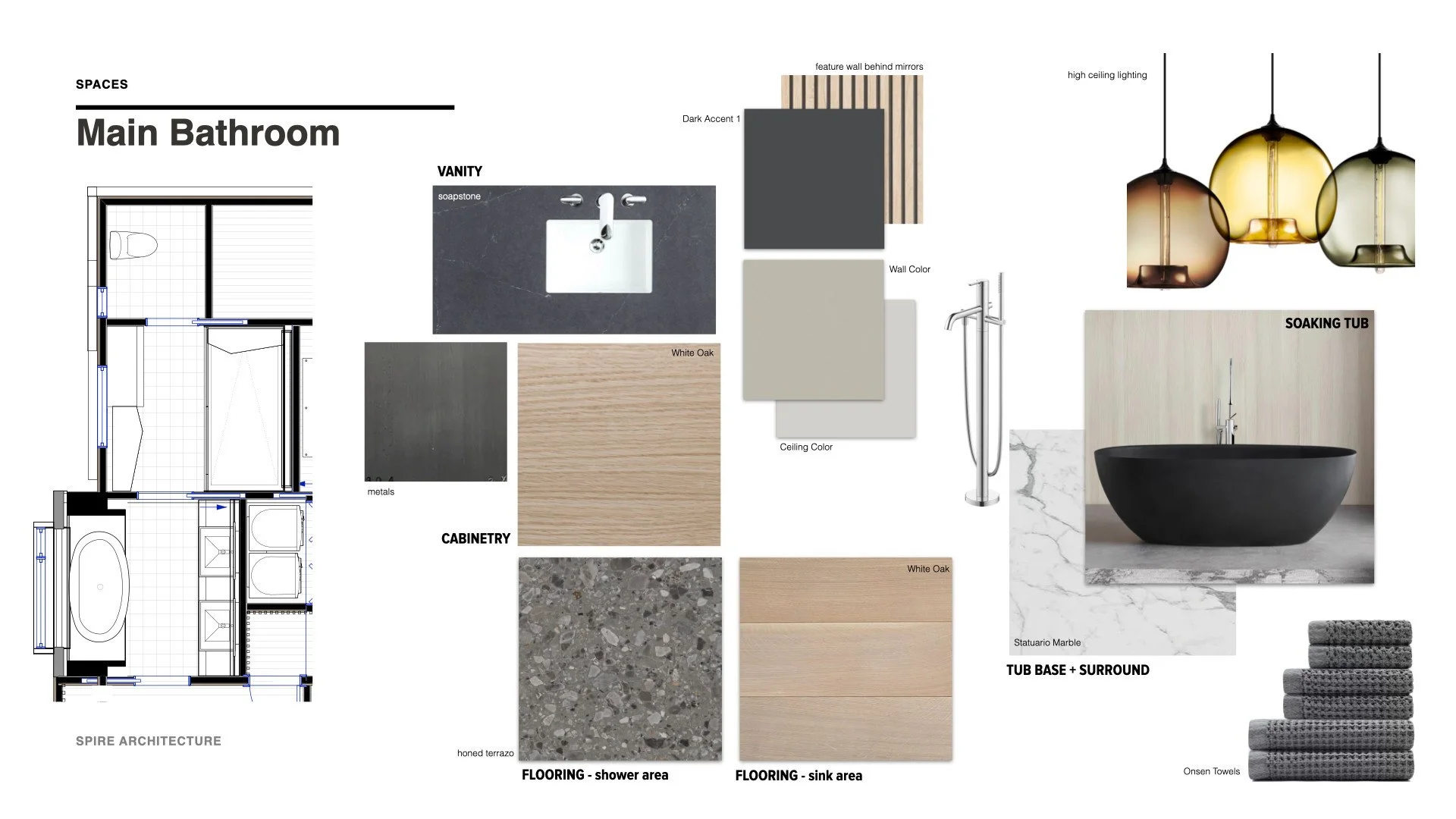
Turn a preference into a decision
During design development, record the product, finish, location, care requirements, and any detail still to resolve. A note that says “warm wood” starts a conversation. A sample and a drawn junction give the people making the room something to work from.